
Pasta Primavera with Fresh Seasonal Vegetables is a vibrant, colorful, and satisfying dish that celebrates the beauty of fresh produce. “Primavera” means “spring” in Italian, and this recipe perfectly captures that spirit — light, fresh, and bursting with the flavors of seasonal vegetables. Tender pasta is tossed with sautéed vegetables in a light garlic and olive oil or cream-based sauce, creating a wholesome and balanced meal that’s both comforting and refreshing.
Originally popularized in the 1970s as an elegant restaurant dish, Pasta Primavera has since become a staple in home kitchens because of its versatility and simple elegance. It’s the perfect way to enjoy a variety of vegetables, whether you’re using what’s fresh from the garden, local market, or your refrigerator.
Why I Love This Recipe
I love this recipe because it’s the perfect combination of freshness, color, and comfort. Each forkful delivers a delightful contrast of crisp-tender vegetables, smooth pasta, and aromatic herbs. It feels hearty yet light, making it suitable for any time of the year.
Another reason I adore this dish is its flexibility — you can easily adjust the vegetables based on the season or what you have on hand. It’s also a great way to make a nutritious and satisfying meal without relying on heavy sauces or complicated steps. For anyone who enjoys the natural sweetness of vegetables and the comforting bite of pasta, this dish is pure perfection.
Why It’s a Must-Try Dish
Pasta Primavera is a must-try because it beautifully showcases the flavors and textures of seasonal vegetables. It’s colorful, nutrient-rich, and deeply satisfying without being overly rich. This dish is a celebration of freshness — the garlic, herbs, and light sauce enhance the natural taste of each vegetable rather than overpowering them.
It’s also an excellent choice for anyone looking for a healthy yet indulgent pasta option. Whether you serve it as a main course or a side dish, it’s sure to impress with its restaurant-quality presentation and taste.
Recipe Details
- Preparation Time: 20 minutes
- Cooking Time: 20 minutes
- Total Time: 40 minutes
- Servings: 4 servings
- Calories: Approximately 350 kcal per serving
- Cuisine: Italian-American
- Course: Main Course / Lunch / Dinner
Ingredients
For the Pasta:
- 12 oz (340 g) penne, fettuccine, or spaghetti
- Salt (for pasta water)
For the Vegetables:
- 2 tablespoons olive oil
- 2 cloves garlic, minced
- 1 small red bell pepper, sliced
- 1 small yellow squash, sliced
- 1 small zucchini, sliced
- 1 cup broccoli florets
- 1/2 cup cherry tomatoes, halved
- 1/2 cup carrots, thinly sliced
- 1/2 cup peas (fresh or frozen)
- Salt and black pepper, to taste
For the Sauce:
- 2 tablespoons olive oil or butter
- 1/4 cup grated Parmesan cheese
- 1/4 cup heavy cream (optional for creamier texture)
- 2 tablespoons lemon juice
- 1/2 teaspoon dried Italian herbs (or a mix of basil, oregano, and thyme)
- Fresh parsley or basil for garnish
Simple Cooking Directions
- Cook the pasta in salted boiling water until al dente. Drain and set aside.
- Sauté garlic and vegetables in olive oil until tender but crisp.
- Toss the cooked pasta with the vegetables.
- Add Parmesan cheese, lemon juice, and herbs.
- Mix well and serve hot, garnished with fresh parsley and more cheese.
Step-by-Step Preparation Method
Step 1: Cook the Pasta
Bring a large pot of salted water to a boil. Add the pasta and cook according to package instructions until al dente. Reserve 1/2 cup of pasta water before draining. Set the cooked pasta aside.
Step 2: Sauté the Vegetables
In a large skillet, heat 2 tablespoons of olive oil over medium heat. Add the minced garlic and sauté for 30 seconds until fragrant. Add the carrots and broccoli first (since they take longer to cook) and sauté for 2–3 minutes. Then add bell peppers, zucchini, squash, peas, and cherry tomatoes. Season with salt and pepper. Cook for another 3–4 minutes until vegetables are tender but still crisp.
Step 3: Make the Sauce
Reduce heat to low and add 2 tablespoons of olive oil or butter to the skillet. Pour in the reserved pasta water and lemon juice. If you prefer a creamy version, stir in the heavy cream at this point. Add the grated Parmesan cheese and dried herbs, stirring until the sauce slightly thickens.
Step 4: Combine Pasta and Vegetables
Add the cooked pasta to the skillet with the vegetables. Toss everything gently until the pasta is evenly coated with the sauce. Adjust seasoning with salt, pepper, or a little more lemon juice to brighten the flavor.
Step 5: Serve and Garnish
Transfer the pasta to serving plates. Sprinkle additional Parmesan cheese and fresh parsley or basil on top. Serve warm.
How to Serve This Recipe
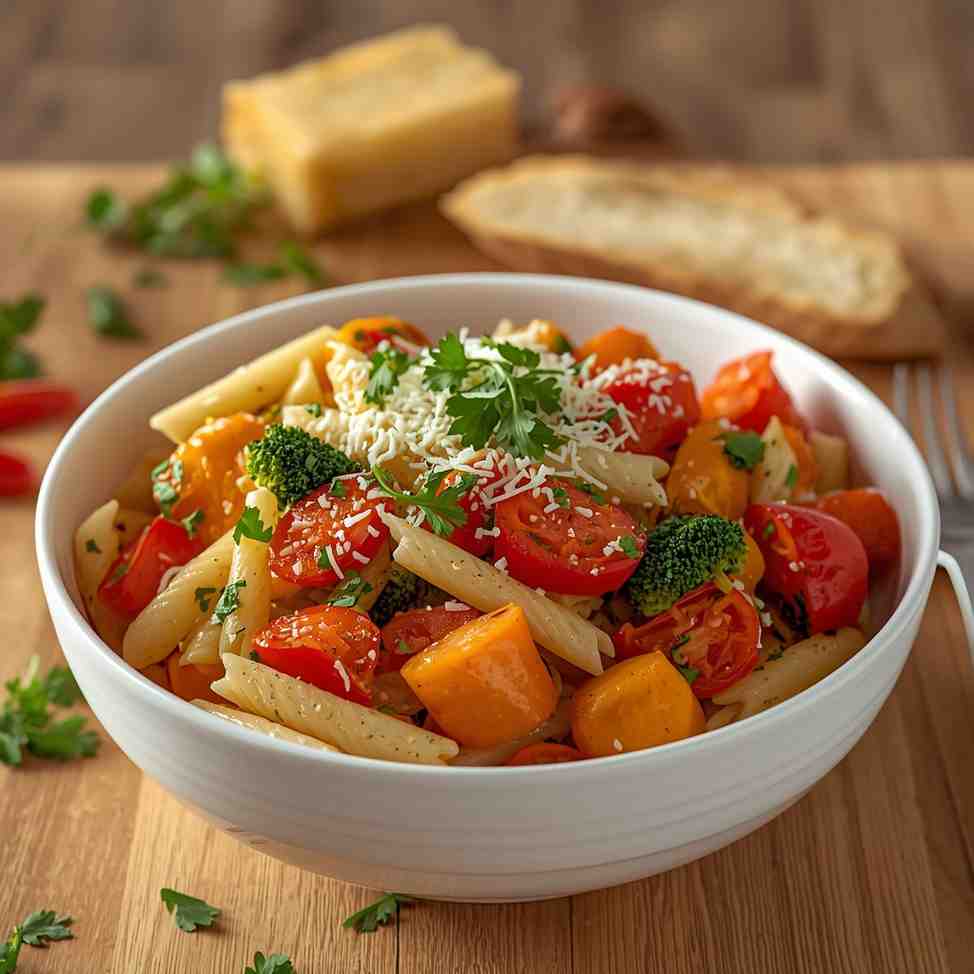
Serve Pasta Primavera immediately while it’s warm and the vegetables are still crisp-tender. It pairs wonderfully with garlic bread, a side salad, or grilled chicken. For a complete Italian-inspired meal, serve with a chilled glass of white wine like Pinot Grigio or Sauvignon Blanc.
Recipe Tips
- Don’t overcook the vegetables — they should remain slightly crisp for the best texture.
- Reserve some pasta water; it helps the sauce coat the pasta more evenly.
- Use fresh seasonal vegetables for the most vibrant flavor.
- To make it lighter, skip the cream and use only olive oil and lemon juice for the sauce.
- Always add cheese off the heat to prevent it from clumping.
Variations for This Recipe
- Creamy Primavera: Add 1/2 cup of heavy cream or cream cheese to make the sauce rich and silky.
- Vegan Version: Skip the Parmesan and cream, and instead use nutritional yeast for a cheesy flavor.
- Spicy Primavera: Add a pinch of red pepper flakes while sautéing the garlic for a little heat.
- Protein Boost: Add grilled chicken, shrimp, or tofu for a more filling meal.
- Pesto Primavera: Replace the lemon sauce with 3 tablespoons of pesto for a fragrant, basil-forward twist.
- Whole Grain or Gluten-Free Option: Use whole wheat or gluten-free pasta for a healthier variation.
Freezing and Storage Time
- Storage: Store leftovers in an airtight container in the refrigerator for up to 3 days.
- Reheating: Reheat in a skillet with a splash of olive oil or water to loosen the sauce.
- Freezing: Not recommended, as the vegetables may lose texture and become mushy when thawed.
Special Equipment Needed
- Large pot (for boiling pasta)
- Large skillet or sauté pan
- Wooden spoon or spatula
- Colander for draining pasta
- Knife and cutting board
- Grater for Parmesan cheese
Conclusion
Pasta Primavera with Fresh Seasonal Vegetables is a dish that truly celebrates the beauty of simplicity. It’s colorful, nutritious, and satisfying without being heavy — a wonderful way to enjoy the natural flavors of fresh vegetables. The light, aromatic sauce ties everything together, making each bite comforting yet refreshing.
This recipe is perfect for weeknight dinners, family gatherings, or when you want to treat yourself to something wholesome and delicious. Whether you keep it simple or elevate it with cream or protein, this Pasta Primavera will always bring freshness, flavor, and joy to your table.
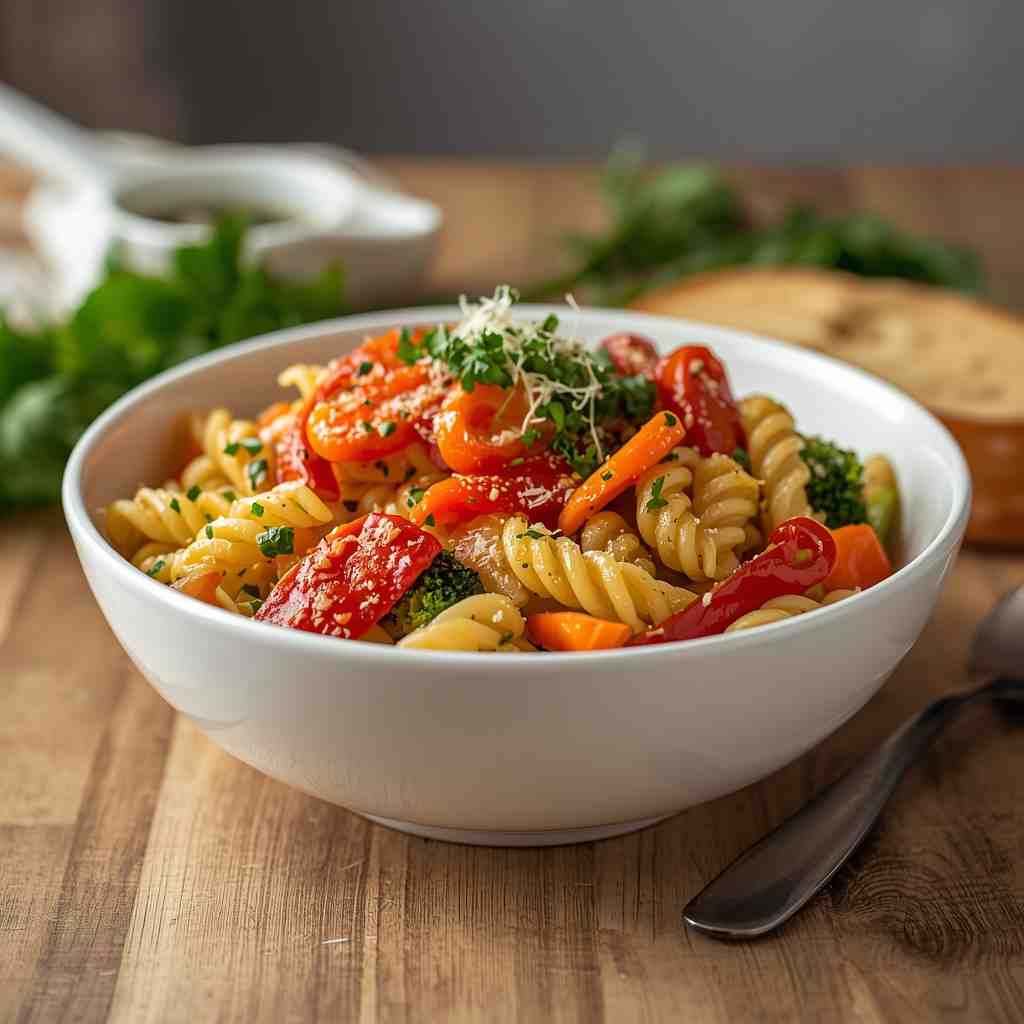

Pasta Primavera with Fresh Seasonal Vegetables
Description
Pasta Primavera with Fresh Seasonal Vegetables is a vibrant, colorful, and satisfying dish that celebrates the beauty of fresh produce. “Primavera” means “spring” in Italian, and this recipe perfectly captures that spirit — light, fresh, and bursting with the flavors of seasonal vegetables.
Ingredients
For the Pasta:
For the Vegetables:
For the Sauce:
Instructions
-
Step 1: Cook the Pasta : Bring a large pot of salted water to a boil. Add the pasta and cook according to package instructions until al dente. Reserve 1/2 cup of pasta water before draining. Set the cooked pasta aside.
-
Step 2: Sauté the Vegetables : In a large skillet, heat 2 tablespoons of olive oil over medium heat. Add the minced garlic and sauté for 30 seconds until fragrant. Add the carrots and broccoli first (since they take longer to cook) and sauté for 2–3 minutes. Then add bell peppers, zucchini, squash, peas, and cherry tomatoes. Season with salt and pepper. Cook for another 3–4 minutes until vegetables are tender but still crisp.
-
Step 3: Make the Sauce : Reduce heat to low and add 2 tablespoons of olive oil or butter to the skillet. Pour in the reserved pasta water and lemon juice. If you prefer a creamy version, stir in the heavy cream at this point. Add the grated Parmesan cheese and dried herbs, stirring until the sauce slightly thickens.
-
Step 4: Combine Pasta and Vegetables : Add the cooked pasta to the skillet with the vegetables. Toss everything gently until the pasta is evenly coated with the sauce. Adjust seasoning with salt, pepper, or a little more lemon juice to brighten the flavor.
-
Step 5: Serve and Garnish : Transfer the pasta to serving plates. Sprinkle additional Parmesan cheese and fresh parsley or basil on top. Serve warm.